The City is a Trap: Why Most "Preppers" Will Fail in the First 72 Hours
In a rural area, survival is about resources. In a city, survival is about strategy. Most Americans live under the "Normalcy Bias"—the dangerous belief that because the grocery store shelves were full yesterday, they will be full tomorrow.
History shows that when the power grid fails or the supply chain snaps, a modern metropolis has roughly **3 days** before the thin veil of civilization vanishes. If you are reading this, you are already ahead of 99% of the population, but having a few extra cans of tuna in the pantry won't save you from a complete urban blackout.
The "Gray Man" Strategy
One of the biggest mistakes urban preppers make is looking like a prepper. Walking down a chaotic street with a $300 tactical camouflage backpack makes you a high-value target. You need to become the **"Gray Man"**—someone who blends in perfectly with the crowd while carrying enough gear and knowledge to navigate the collapse unnoticed.
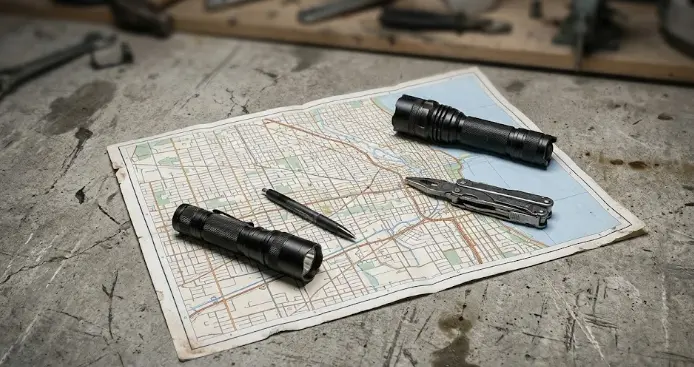
Critical Urban Gear Audit:

⚠️ THE HARSH TRUTH:
Buying gear is easy. Acquiring the **instincts** to use that gear under extreme stress is what separates those who survive from those who become statistics. If you don't have a plan for the "Day 4" scenario—when the city water pressure drops to zero—your survival window is closing fast.
Cracking the Urban Code
There is a specific set of protocols used by elite security details and specialized "Extraction" teams. It’s not about fighting; it’s about **avoidance, positioning, and resource management.** Until recently, these codes were kept within a small circle of professionals.
The **Urban Survival Code** has simplified these professional strategies into a step-by-step blueprint designed for the average citizen who refuses to be a victim of circumstance.
Warning: This presentation contains sensitive information about grid vulnerability. Watch while it's still online.